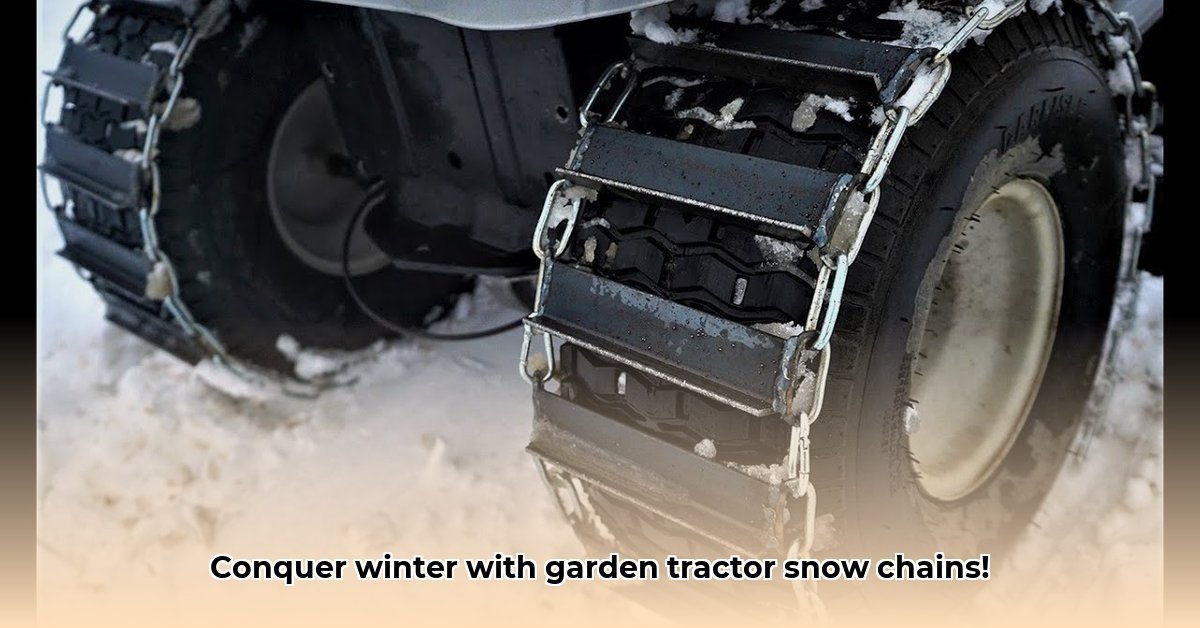
Winter's grip can quickly transform your garden tractor from a helpful workhorse into a decorative snow sculpture. Don't let the snow win! This comprehensive guide equips you with the knowledge and skills to select, install, and maintain snow chains, ensuring your tractor continues to perform reliably throughout the coldest months. We'll explore various chain types, selection criteria, installation techniques, and troubleshooting tips, ultimately empowering you to conquer winter's challenges. For more in-depth information, check out this detailed guide.
Types of Snow Chains: Matching Chains to Your Needs
Several snow chain types cater to different needs and snow conditions. Choosing the right type is critical for both performance and safety. Think of it as choosing the right tool for a specific job – you wouldn't use a hammer to screw in a screw, would you?
| Chain Type | Pros | Cons | Ideal Conditions |
|---|---|---|---|
| Ladder Chains | Simple, affordable, easy installation | Limited grip in heavy snow or ice | Light snow, occasional use |
| Diamond Chains | Superior grip, suitable for packed snow/ice | Slightly more complex installation, higher cost | Moderate to heavy snow, icy patches |
| V-Bar Chains | Excellent ice grip, aggressive traction | Can be tough on tires, challenging installation | Extremely icy conditions, demanding situations |
| Studded Chains | Maximum grip for severe ice conditions | Most expensive, potential for surface damage | Severe ice, extreme conditions, professional use |
The optimal chain type depends on the severity of winter conditions and your tractor's intended use. Are you tackling light flurries or deep snowdrifts? This question will guide your decision.
Choosing the Right Chains for Your Garden Tractor
Selecting the correct snow chains involves several key steps. It's akin to choosing the right shoes – the wrong size results in discomfort and poor performance.
Measure Your Tires: Accurately measure your tractor's tire diameter and width. Incorrect sizing leads to poor performance, potentially damaging your tractor and tires.
Consult Your Owner's Manual: Your tractor's manual may provide specific chain recommendations. Manufacturers often offer detailed specifications that enhance safety and performance.
Assess Your Needs: Consider your typical snowfall, terrain, and intended use (light snow clearing, heavy-duty plowing). This assessment directly impacts your chain selection.
Remember, choosing the right size is paramount. Loose chains are ineffective, while overly tight chains risk damaging your tires. Aim for a secure, yet comfortable fit.
Installing Snow Chains: A Step-by-Step Guide
Correct chain installation is critical for safety and effectiveness. While it may seem daunting initially, following these steps ensures a secure and reliable fit.
Preparation: Clear snow and ice from around the tires. Engage the parking brake for safety.
Positioning: Carefully drape the chain around the tire, ensuring even distribution. A rushed installation often results in problems.
Connection: Adhere strictly to the manufacturer's instructions. Specific procedures differ between chain types.
Tension Adjustment: Tighten the chains to appropriate tension, securely fastening all clasps following the manufacturer's guidelines.
Test Drive: After installation, perform a brief test run, checking for slippage or any unusual noise. This step will ensure a safe and efficient run.
Always consult the manufacturer's instructions and visual aids for detailed guidance specific to your chosen chain type.
Using and Maintaining Snow Chains: Maximizing Longevity
Driving with snow chains requires a modified driving style. Smooth acceleration and braking reduce strain on both the chains and your tractor. Regular maintenance extends the life of your chains and ensures they remain reliable.
After each use, inspect chains for wear, broken links, or rust. Proper storage in a dry location protects them from corrosion and damage.
Troubleshooting Common Problems
Even with careful preparation, situations may arise. Here’s how to address common issues:
Chain Slippage: Often caused by loose chains. Carefully retighten and check for proper installation and even tension. (Increased Slippage often results in loss of traction and potential accidents).
Chain Breakage: Immediately cease operation and replace the damaged chain. Damaged chains are serious safety hazards and need immediate action.
Tire Damage: Inspect tires for any damage immediately. Repair or replace damaged tires before further use to prevent accidents.
How to Compare Tractor Tire Chain Performance Across Brands
Choosing among various brands can be overwhelming. Consider these key factors when evaluating different brands and models:
Features: Compare chain types, material quality, and design features. Features significantly impact performance in varying conditions.
Reviews: Check online reviews to gain insights into the real-world experiences of other users. Real-life feedback offers valuable perspectives.
Your Needs: Match the chains' capabilities to your specific snow conditions and tractor use. Always select chains appropriate for the conditions. This helps reduce the risk of accidents.
Remember, snow chains amplify safety and traction; prioritizing safety is critical.
Key Takeaways:
- Snow chains dramatically boost garden tractor traction in snow and ice.
- Chain types vary in grip, durability, and installation complexity.
- Proper selection, installation, and maintenance are crucial for peak performance and safety.
- Comparing brands demands a careful evaluation of features, user feedback, and your specific requirements.
This guide provides a framework for navigating the world of garden tractor snow chains, enabling safe, efficient winter operation. Remember—your tractor's winter performance is in your hands!